The cause of heavy smog in Beijing is similar to the great smog in London in 1952: Immense consumption of coal. In the winter of 1952, they heavy burning of coal in the Londoners' home, together with the anticyclone which prevent the smoke rose into the atmosphere, caused the great smog in 1952. Similarly, Beijing has been suffering from smog in recently years. The heavy reliant of China's economy on steel means huge amount of coal has to burnt in order to produce steel. Burning coal release air pollutants named PM 2.5 (particulates smaller than 2.5 micrometer) into the atmosphere.
How much more coal is China burning in 2010 than UK's 1952 record?
According to UK's
Department of Energy & Climate Change, the coal consumption in 1952 is 225 million tonnes, which have already caused the great smog. Meanwhile in China, solely in 2010 the total amount of coal burnt is 3.2 billion tonnes. This is 13 times of the 1952 UK's level.
Consequently, air pollution is severe in China. It is best shown in its capital city, Beijing. Beijing issued its most severe air pollution warming in December 2015. The level of PM 2.5 in the air is 20 times more than the World Health Organization suggested level.
The pie chart above shows where does the air pollutants came from. Beijing has the worst air pollution compared to other more industrialised cities is because of the huge rise in car ownership (approximately 5 millions vehicles,
Yahoo), which accounts for 22% of the PM 2.5. Direct coal pollution itself contributes 16.7%, while the "pollution from districts around Beijing", for example Hebei province, involves high amount of coal burning from steel production and coal-fired power plants (11% of world's production of steel; 95% of public heating from coal;
Fortune), the effect of coal pollution is huge.
As a result of air pollution and smog, clean air has changed from free, public goods into luxury goods.
Affluent Chinese starting to buy bottle of fresh air from Banff National Park in Canada for roughly £10/bottle and is 50 times more expensive than a bottle of mineral water. The most interesting part is that the founder of the company, Vitality Air starts the company as a joke but ending up created a huge market of clean air.
What is the economic cost of smog?
- According to the World Bank, disease and death caused by air pollution leads to annual losses of 3% of GDP in the 21st century
- Lower life expectancy. People in Northern China has 5 year less life expectancy than people in the South and caused 1.6 million people died prematurely annually. (theguardian)
- Agricultural loss. The paper written by Wei et al. (2014) indicates the relationship between air pollution and economic agricultural loss. The economic growth of major Chinese cities rely on the burning of fossil fuels and emits pollutants such as PM10 and SO2. While according to Cao (1989), high concentrations of SO2 for some Chinese cities and industrial areas in the
1980s reduce the growth and yield of local crops and vegetables
by 5.25%. Wei examined this statement using empirical data. They have created an equation estimating agricultural economic loss including variables such as crop production under influence of SO2. They concluded that solely in 2008 the loss due to SO2 are roughly 1425m USD$ (0.66% of agricultural value of China). They also found significant positive correlation in regional agricultural loss and industrial emission.
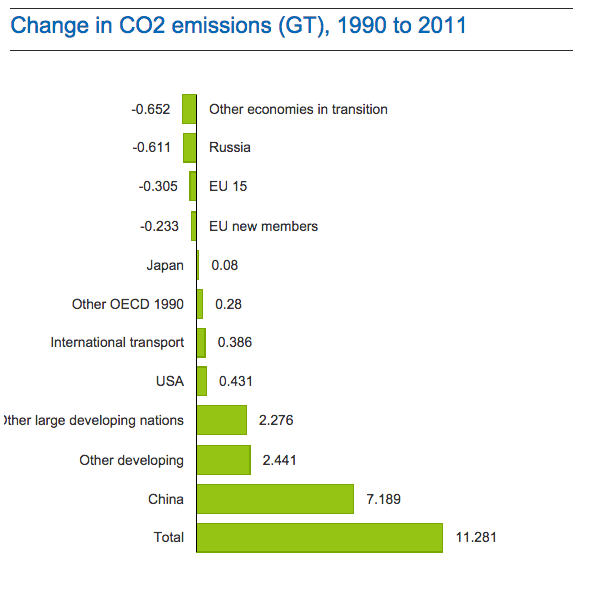
To me, the causation of smog in Beijing is not solely the consequences of the Chinese over-polluting their homeland in exchange of economic development. It is also the result of global economic development. Many of the Western countries still enjoying economic growth is because they have outsourced the production process to the East, especially China, where labour cost is low. Yes, the Chinese is polluting their atmosphere in order to produce goods for more GDP. Yet how much of these will end up selling in Europe? How many of the goods nowadays are made in China? Can we exempt ourselves from the pollution in Beijing?